Perspective

Corporate responsibility, Drive technology

Pascal Aegerter, branch manager at Planzer Leasing and responsible for fleet management.

planzer.ch

Interview

Questions for Planzer Leasing

27 April 2026

Planzer Leasing handles everything relating to our fleet. We asked branch manager Pascal Aegerter what this means specifically and which internal and external factors influence fleet decisions. We also take a look at the future and clarify which social and political conditions will be of particular importance in fleet management in the near future.

Pascal Aegerter, branch manager at Planzer Leasing and responsible for fleet management.

planzer.ch

// Planzer: Planzer: Pascal, how long have you been at Planzer and which area do you work in?
Pascal: I’ve worked at Planzer for nine years. I started out in the technical department in the customer service team. Then I switched to leasing. I’ve been working here as a branch manager for two years now.
// What do your responsibilities and duties include?
In short, anything to do with vehicles. This includes traditional vehicle and forklift procurement, i.e. purchasing. It also includes the procurement and organisation of fuel and charging stations for our electric fleet. In addition, we are responsible for all aspects of handling during the use of the vehicles, right through to their sale.
// What do customers expect from Planzer with regard to sustainable and alternative drive technologies?
Expectations have risen. Our customers want to know more and more details about what we are doing to promote sustainable transport. The importance and attention given to this topic are undoubtedly growing. This is due not least to societal developments and increasing political significance, along with the accompanying regulations and requirements for our customers.

‘Enquiries from customers about sustainable transport services are becoming increasingly sophisticated and go into greater detail.’

Pascal Aegerter, Head of Planzer Leasing
// How has this demand developed?
The number of enquiries has increased. We are also seeing dynamism in terms of quality and attention to detail. In the beginning, we took a cautious approach. The aim was to find out what solutions were actually available on the market and what made sense to use. Over time, the enquiries have become much more specific and detailed. Our clients and employees have dealt intensively with this topic. Consequently, today’s enquiries focus much more on charging options, range and costs.
// Which political and legal developments do you need to take into account in the new fleet strategy?
The adjustment of the heavy goods vehicle charge, or HGVC for short, is something we will continue to focus on. It is not yet absolutely clear how and when the new charges will apply. But they’re coming, that’s for sure, which means we need to think about procurement today. That is, about how and when we will replace the current vehicles, and what to replace them with. Further developments in engine technologies, the move towards the Euro VII standard, and new and stricter safety regulations present further challenges.
// How do we address the challenge that sustainable technologies often require higher investment in procurement and infrastructure?
Clear and transparent communication with the branches is crucial here. When making a purchase, it is important to look beyond the vehicle itself and to highlight and consider the fact that sustainable technologies – especially electric drives – always involve higher overall investments, for instance in charging infrastructure. ‘Green’ low-emission transport is in demand and offers added value. Initially, however, it can also be costly. We need to be able to communicate these aspects to our customers in a transparent and realistic manner.
// Let’s talk about e-mobility specifically: what’s new in the field of electric trucks?
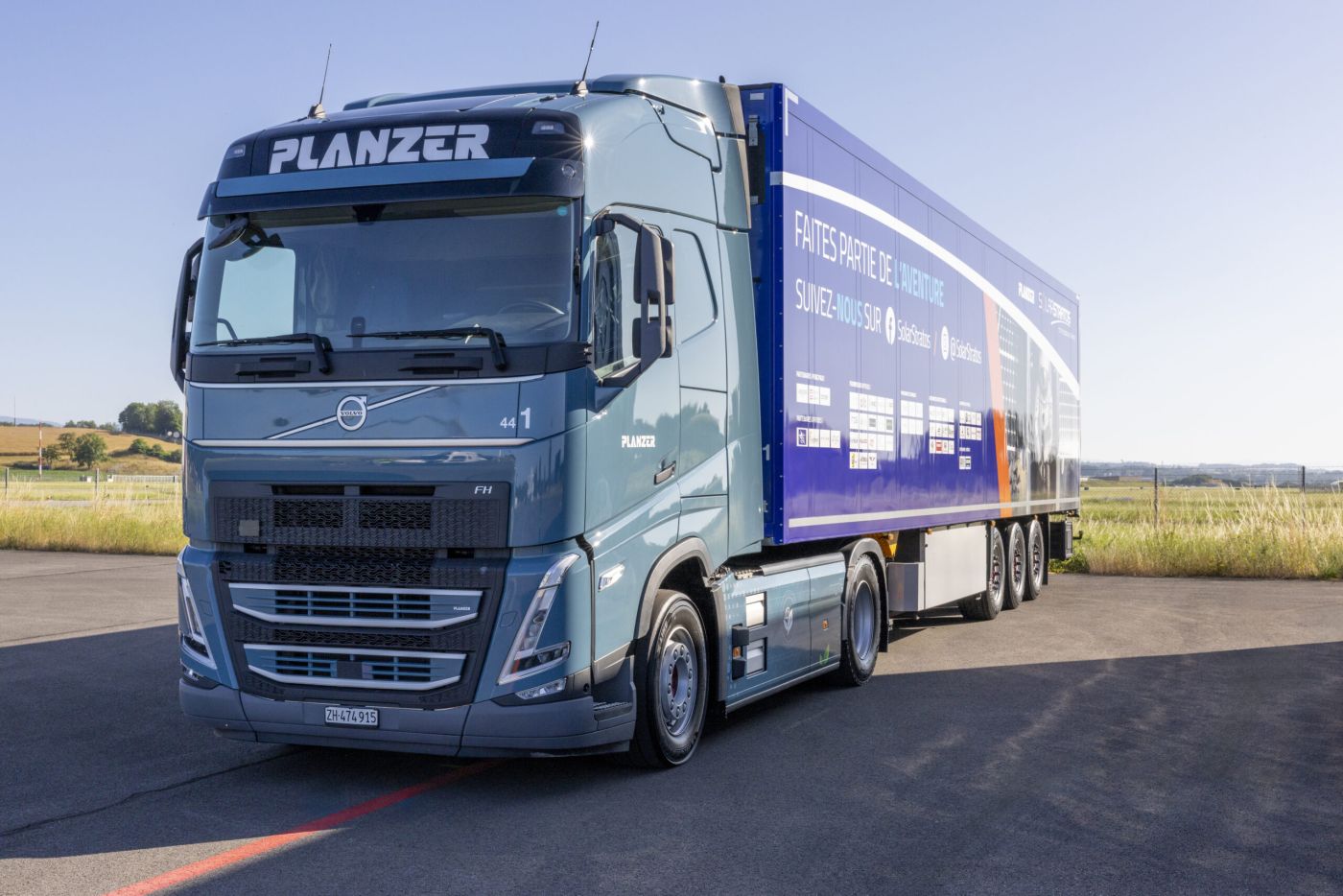
In my opinion, electric truck manufacturers have made enormous strides in the last two years. They no longer offer test vehicles, but fully operational models. Ranges in particular are increasing all the time, which is crucial when it comes to vehicle use. Current vehicles manage around 500 km. A few years ago, the figure was just over half that. Delivery times for new models have also stabilised at a good level. A tractor unit can be delivered within about four or five months. So there has been positive development in a lot of things.
// What is currently the biggest challenge in practice?
The biggest challenge lies in charging infrastructure – particularly with regard to grid capacity, cables and building facilities. At the same time, as the number of electric vehicles increases, the efficient use of charging stations is gaining in importance. Even now, these are often occupied by vehicles that no longer need to charge or are already fully charged. As there will not be a separate charging station for every vehicle in the future, proactive planning and coordinated charging times will be necessary.
// What chances and opportunities are emerging for us as a result of developments and adjustments in the fleet? Should we be first movers here?
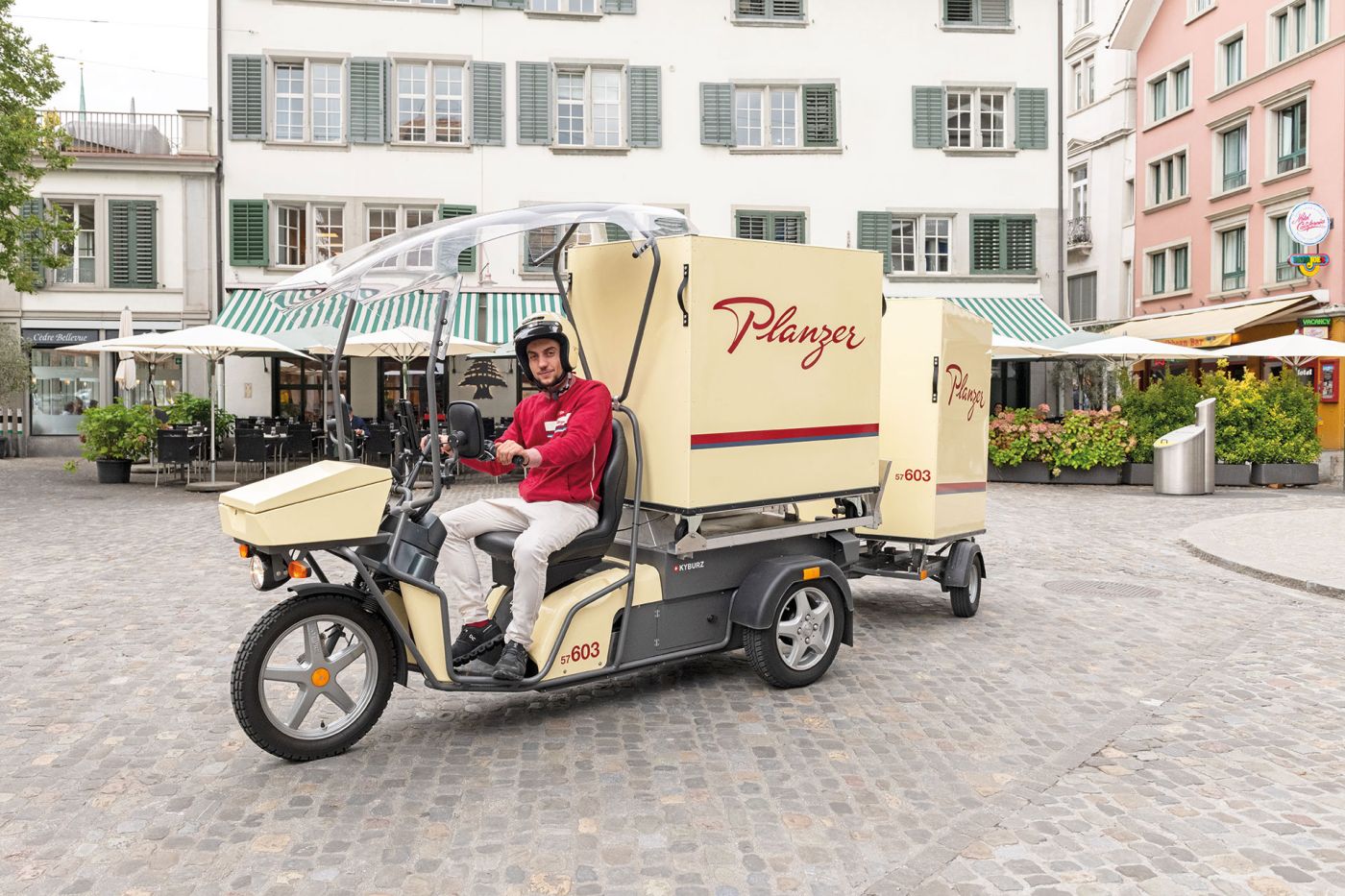
We have already implemented a number of e-mobility projects. Being a first or early mover also has its disadvantages. The vehicles’ ranges are constantly increasing and procurement costs have fallen significantly compared to the early days. Older vehicles are therefore generally more expensive and have shorter ranges. On the other hand, I see us as a first mover when it comes to using hydrotreated vegetable oils, HVO for short, as fuel. We were the first transport company in Switzerland to use this product. We have had very positive experiences with it and will continue to expand its use in the future.

‘We are taking an approach of technological openness and don’t want to close ourselves off. Instead, we remain open to a wide range of alternative drive technologies and ways of producing fuels.’

Pascal Aegerter, Head of Planzer Leasing
// What other drive technologies will be important in addition to electrification?
Politically, there is a strong focus on electrification today. However, a lot will change over the next few years. Synthetic fuels or hydrogen, for example, could become a bigger topic. For Planzer, HVO will continue to play an important role. We are taking an approach of technological openness and don’t want to close ourselves off. Instead, we remain open to a wide range of alternative drive technologies and ways of producing fuels.
// What external influences are likely to affect our fleet in the near future?
The HGVC will certainly remain a key issue in the future. Even if the charges are adjusted, it will not be possible to switch all vehicles to Euro VII immediately. Euro VI will remain in use for some time to come. Electricity prices are also likely to rise, which will impact the operating costs of our electric trucks. At present, certain technologies are still subsidised or enjoy tax relief. In the long term, these benefits will also be phased out. At the same time, increased CO₂ levies and other state taxes are making the use of alternative technologies even more worthwhile.

Similar posts